July 20, 2026
AI Receptionist for Small Business: The 2026 Owner's Guide
What an AI receptionist costs a small business in 2026, how it answers and books work 24/7, and why field businesses need dispatch, not message-taking.
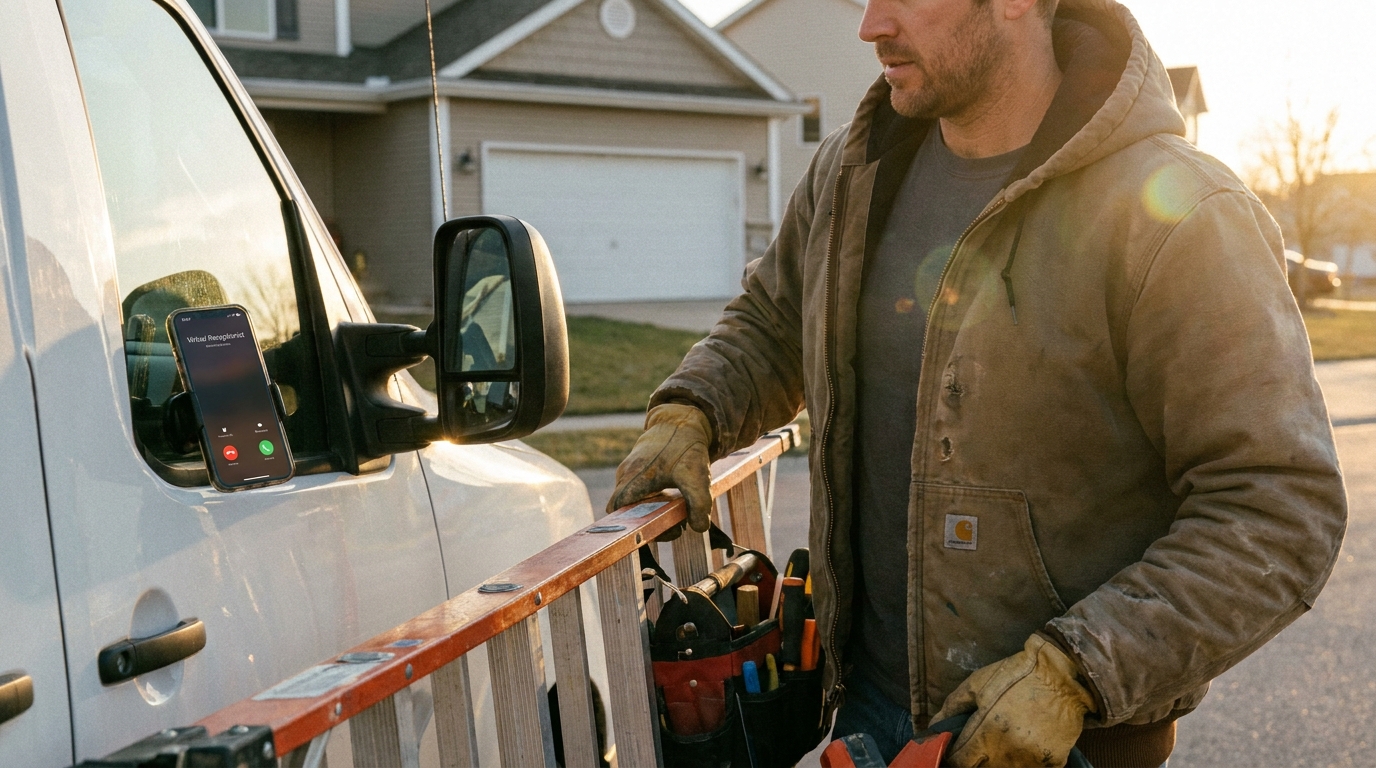
TL;DR: An AI receptionist answers your business phone 24/7, qualifies the caller, and books the work for a fraction of what a human hire costs. Generic plans run $25 to $300 a month and are fine for booking appointments. If your business rolls trucks, you need more than that: emergency triage, live dispatch, and CRM write-back. This guide covers what an AI receptionist does, what it costs, and how to pick one that books jobs.
Here is the number that should bother every small business owner: businesses answer only 37.8% of their inbound calls. The rest hit voicemail or ring out, and 85% of those callers never call back. They do not leave a message. They dial the next name on Google.
For a salon, a missed call is a lost haircut. For a contractor, it is a lost $5,000 job, and sometimes a lost $50,000 one. I learned that the hard way: I built RestorationAI.io after my uncle, a restoration contractor, lost an $80,000 condominium job to a single missed call.
AI receptionists went mainstream fast. 76% of small businesses now report using AI in some form, and the phone is one of the first places owners put it. But almost every guide to this category is written for dental offices and law firms. This one is written for the rest of us: businesses where the call ends with a truck rolling to a property. Here is what an AI receptionist actually does, what it costs in 2026, and how to choose one that earns its fee.
What is an AI receptionist and how does it work for a small business?
An AI receptionist is software that answers your business phone with a natural voice, asks the caller what they need, answers common questions, books the appointment or job, and sends you the details, 24 hours a day. You keep your existing number: calls forward to the AI whenever you cannot pick up, or all the time.
Under the hood, the flow is simple:
- The call forwards and the AI answers within seconds. No hold music, no “press 1,” no concurrency limit. Ten callers at once all get answered.
- It runs your intake conversation. Not a generic script. A configured AI asks your questions: what happened, where, how urgent, and who is authorized to approve the work.
- It takes action. Depending on the platform, that means booking a slot on your calendar, quoting your prices, dispatching a technician, or politely ending a spam call.
- It logs everything. You get the recording, a summary, and a transcript, and the lead lands in your CRM instead of on a sticky note.
That last mile, the action, is where tools differ most. If you want to see what a demanding intake conversation looks like call by call, read our guide to the AI receptionist for restoration companies, which walks through emergency triage step by step.
How many calls does your small business actually miss?
The average small business answers just 37.8% of its inbound calls, and 85% of callers who reach voicemail never call back. Miss ten calls this week and the data says eight or nine of those buyers are gone for good, most of them to a competitor.
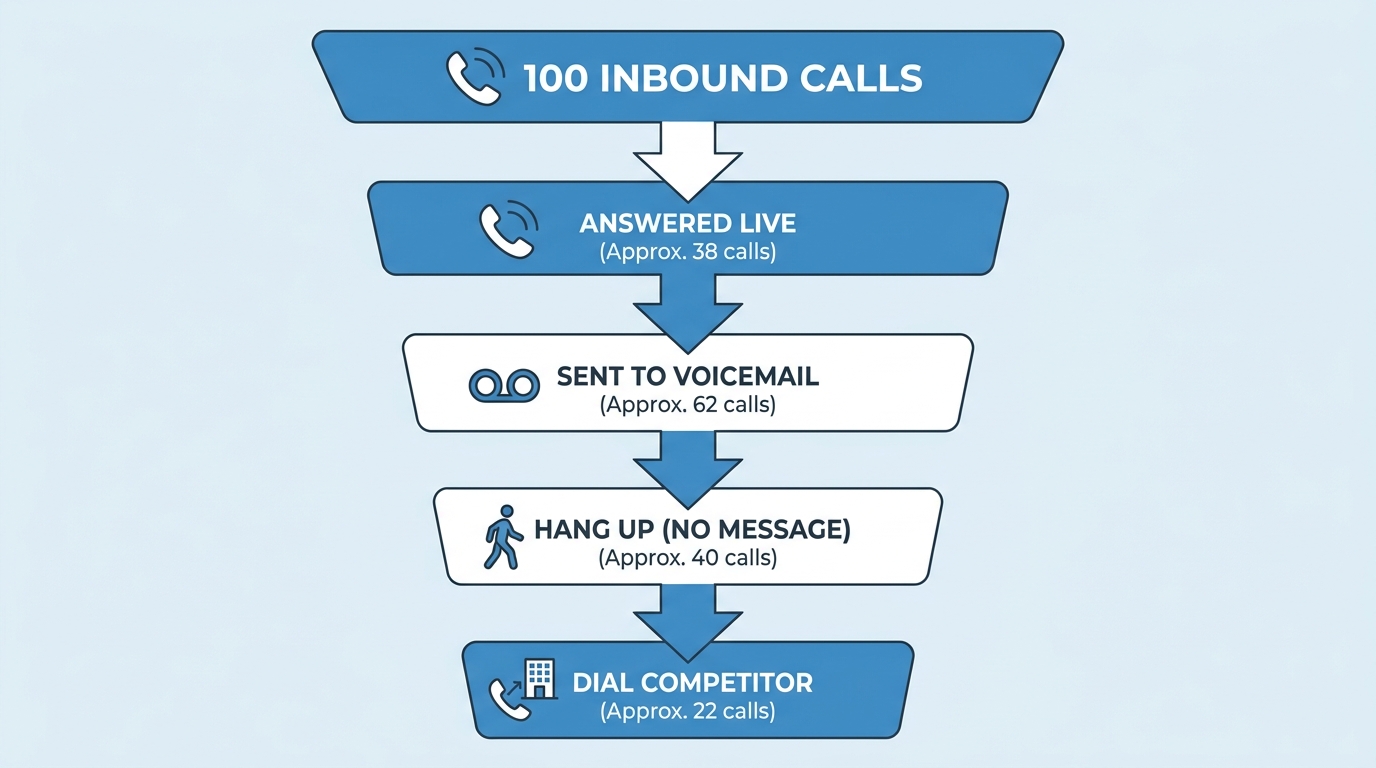 Where 100 inbound calls actually go: barely a third reach a live answer, and voicemail recovers almost none of the rest. Data: 411 Locals study via Aira.
The timing makes it worse for service businesses. Roughly 47% of service calls come in outside business hours, and 58% of home service calls are emergency-related. The callers you miss at 9 PM are not browsing. They have water on the floor or a furnace that quit, and industry estimates put the average revenue loss per missed home-service call at $285 or more. We broke down that nights-and-weekends problem in detail in our after-hours answering service guide.
And if you run a small team, be honest about who the receptionist is. It is you, and you are on a ladder, under a sink, or driving between jobs. The miss rate is not a discipline problem. It is physics.
Can an AI receptionist book jobs and dispatch a crew, not just take messages?
Yes. The right AI receptionist books the job, pages your on-call tech, and writes the work order into your CRM while the caller is still on the line. Most tools cannot do this. They were built for offices, so they stop at taking a message or filling a calendar slot.
Most AI receptionist guides are written for dentists and law firms. I spent six years as a restoration technician, and no customer ever called us hoping for an appointment next Tuesday. They called because water was coming through the ceiling. If the software cannot triage that call and get a crew moving, it is voicemail with a nicer voice.
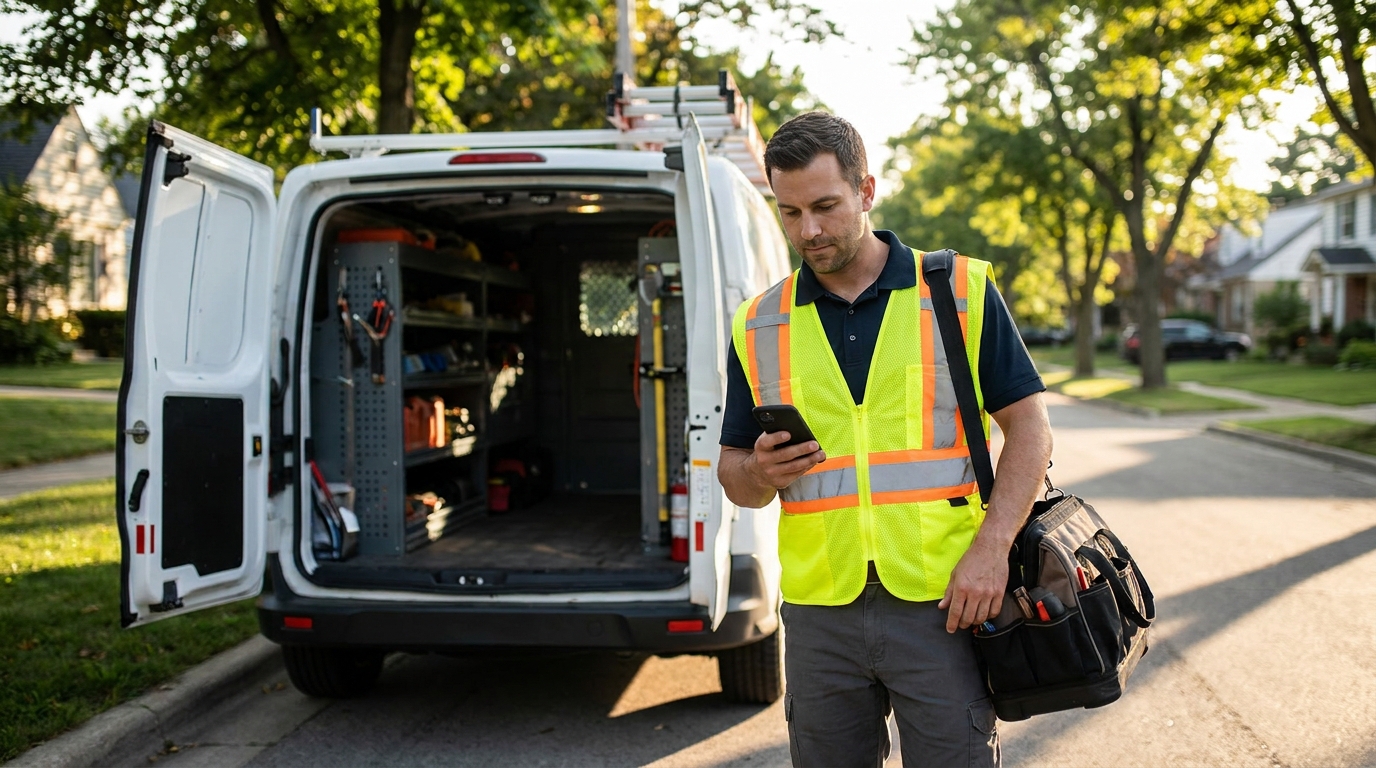 The test that matters: does the on-call tech’s phone buzz with full job details before the caller hangs up?
Here is what dispatch-capable looks like in practice. The AI qualifies the caller, then pushes an instant notification to your on-call tech, who accepts or declines with one tap. If nobody answers, it cascades to the next person in your priority order until someone takes the job. At the same time, the intake data (name, address, service type, urgency, notes) writes into your CRM over webhooks: JobNimbus, Housecall Pro, Jobber, ServiceTitan, or whatever your crews live in.
In my years on the truck, the jobs we lost almost never came down to price. They came down to a message on a sticky note that the on-call guy saw six hours too late. Answering was never our problem. The handoff was.
When you evaluate tools, score that handoff first. We published the full five-feature checklist in our AI receptionist software buyer’s guide.
How much does an AI receptionist cost for a small business?
An AI receptionist costs $25 to $300 per month for generic small business plans, and $297 to $597 per month for field-service platforms that include dispatch and CRM write-back. Per-minute plans run roughly $0.25 to $0.48. Every option costs less than the $41,700 average salary of a human receptionist.
Here is the 2026 market at a glance:
| Option | Typical 2026 cost | What you get |
|---|---|---|
| Budget AI receptionist | $25 to $65 per month | Answering, messages, simple booking |
| Mid-market AI receptionist | $109 to $299 per month | Better voices, calendar sync, basic CRM connections |
| Field-service AI platform | $297 to $597 per month | Triage, live dispatch, work authorizations, CRM write-back |
| Live answering service | $0.75 to $1.50 per minute | A human takes a message, one call at a time |
| Full-time receptionist | About $41,700 per year, and 1.5x to 2x that with taxes and benefits | 40 hours a week, no nights or weekends |
Watch the fine print on cheap plans: setup fees, overage charges, and paid integrations can double the advertised price once your call volume is real.
For transparency, here is where we sit: our Leakproof plan is $297 a month for 24/7 answering and lead qualification, and Rapid Response at $597 adds dispatch, automated work authorizations, visual intake, and route-aware booking. No contracts, no setup fees.
The monthly fee is still the wrong number to optimize. The right number is cost per booked job. I ran that math, including why AI lands around $2.32 per call against $8 to $14 for a live service, in our answering service versus AI breakdown.
Is an AI receptionist better than a human answering service for a small contractor?
For a small contractor, yes: an AI receptionist answers on the first ring at 2 AM, takes unlimited simultaneous calls during a storm, asks your exact scoping questions every time, and costs a flat fee instead of per-minute billing. A live service only wins when a caller truly needs a human, and a good AI escalates those calls anyway.
The speed data settles most of this argument on its own. 78% of buyers go with the company that responds first, and contacting a lead within five minutes makes you 21 times more likely to qualify them than waiting half an hour. A live answering service still beats voicemail, but it queues when call volume spikes, bills you by the minute while it does, and usually ends the call with “someone will get back to you.” I compared the two models line by line in our guide to the answering service for contractors.
The old objection was that AI sounds robotic. In 2026 that argument is mostly dead, but latency and interruption handling still separate good from bad, especially with a panicked caller. Here is how to judge an AI voice receptionist before you trust it with your line.
One honest caveat: if your phone genuinely never rings when you cannot answer it, and you have zero after-hours or surge exposure, a budget tool or even voicemail may be fine. Every other owner is leaving booked jobs in the voicemail box.
How fast can a small business set up an AI receptionist?
Most small businesses can go live with an AI receptionist in under a week: self-serve tools activate the same day, and fully configured field-service platforms go live within about 48 hours of a single onboarding call. There is no hardware and no new phone number. You forward the line you already have.
Our setup, as one concrete example, takes three steps:
- Sign up or book a demo. Free to start, no credit card.
- One onboarding call. A rep configures your services, custom pricing, routing rules, and work authorization templates, so the AI asks your questions and quotes your numbers.
- Forward your calls. The AI is live 24/7 from that moment. Unforward the line and it is off. There is no rip-out risk.
That reversibility is worth noticing. Hiring a receptionist is a $50,000 decision you unwind slowly and painfully. Trying an AI receptionist is a call-forwarding code.
If you want to test whether this actually works for your business, do not read another roundup. Book a strategy call with us, then call the demo line and be your own worst customer: interrupt it, ramble, present your ugliest 2 AM emergency. Watch whether a job card shows up in the CRM and a dispatch ping hits a phone, timestamps included. That five-minute test will tell you more than any guide, including this one.