June 21, 2026
After-Hours Answering Service: Why the 2 AM Call Is the Job You Can't Afford to Miss
Most after-hours answering services just take a message. For emergency trades, the after-hours call is the job. Here is what an after-hours service should actually do, what it costs, and why AI now wins.
TL;DR: Roughly 35 to 40% of inbound calls to home-service and restoration contractors land after business hours, and on weekends nearly half go unanswered. Most after-hours answering services just take a message and call you in the morning. By then the job is gone. For emergency trades, the after-hours call is not a lead, it is the job, and it goes to whoever answers first. An AI after-hours answering service answers every call instantly, triages the emergency, and dispatches your crew, for a fraction of what a live service costs.
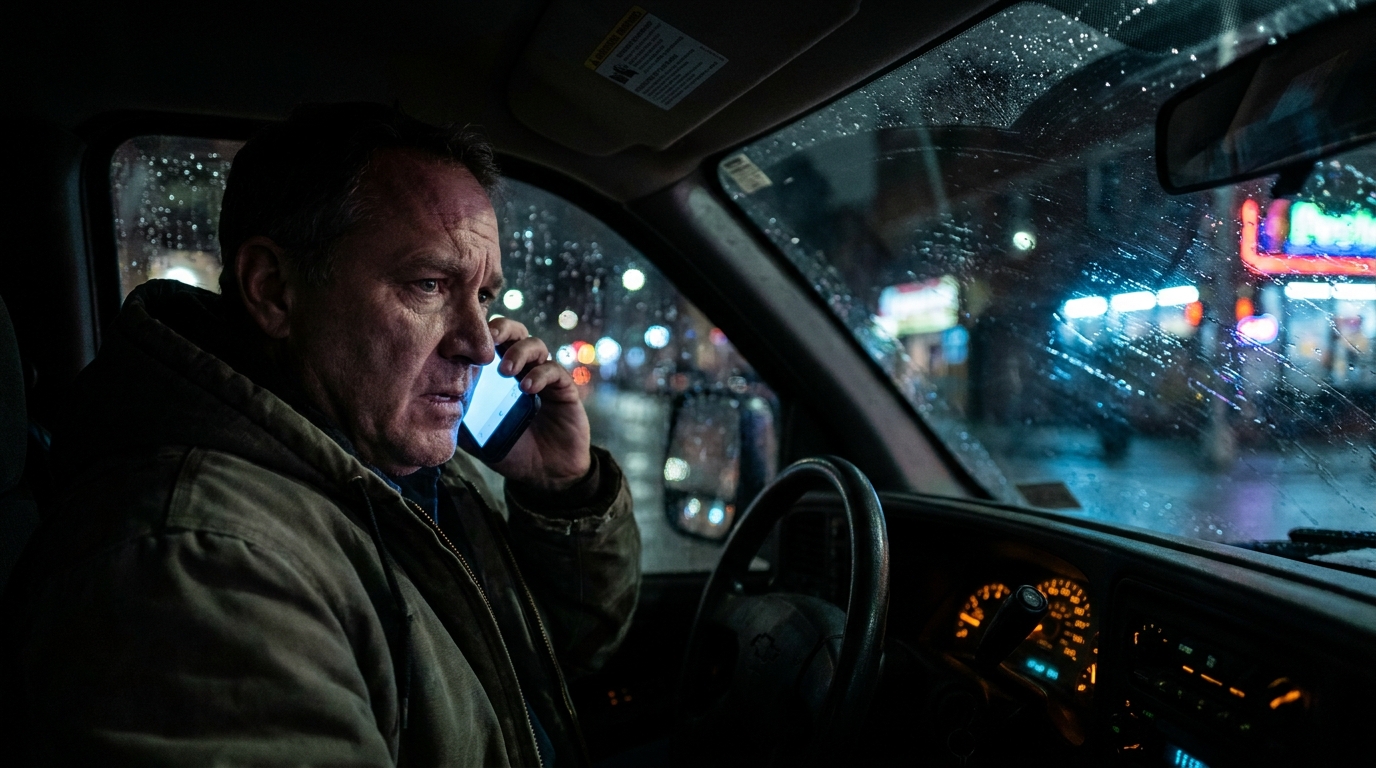
It is 2:14 AM. A pipe just let go in a homeowner’s kitchen and water is running into the basement. They are scared, they are wide awake, and they are calling down a Google list. The first contractor who answers with a calm voice and an arrival time wins the job. Everyone else gets to read about it in the morning.
That is the entire game for emergency trades. And it is the reason an after-hours answering service is not a nice-to-have. It is the difference between booking the loss and hearing about it secondhand.
In my six years working as a restoration tech, the calls that built the business were almost never the 10 AM ones. They were the floods at midnight and the sewage backups on Sunday. The companies that grew were simply the ones that picked up.
Why do so many after-hours calls go unanswered?
Because nobody is sitting at a desk at 2 AM, and your best people are asleep. The math is brutal: 35 to 40% of inbound calls to home-service contractors come in after business hours, and weekend unanswered-call rates climb to 41% versus 18% on weekdays. For some trades it is worse, with 60% of after-hours HVAC calls going unanswered.
Here is the part that hurts. 85% of callers who do not reach a live answer will not call back. They dial the next number. So an after-hours miss is not a delayed lead, it is a permanently lost one. Across 1,200-plus contractors, the average small contracting business loses $45,000 to $120,000 a year to unanswered calls, and after-hours tickets are worth more than daytime ones, not less.
How many jobs are you really losing after hours?
More than your voicemail will ever tell you, because missed calls do not show up on a report. A typical residential emergency-trade contractor fields 8 to 12 emergency service calls per week outside business hours, and those after-hours tickets are worth more, often $450 to $600 versus around $275 for a standard daytime call. Miss a third of those to voicemail and you are handing a competitor several thousand dollars a month.
Now add weather. When a storm rolls through your market, call volume can spike tenfold overnight, and that is exactly when the largest losses get assigned. A live operator or a tired owner cannot answer ten calls at once, so the overflow goes to whoever can. The companies that capture a storm are not the ones with the biggest crews, they are the ones whose phone never gave a busy signal at 3 AM.
What is an after-hours answering service and how does it work?
An after-hours answering service answers calls that come in when your office is closed, nights, weekends, and holidays, so a real voice greets the caller instead of voicemail. A traditional service routes your overflow calls to a remote human operator who takes a message and texts or emails it to you. A modern AI service answers instantly, asks the right intake questions, and then calls and texts your on-call crew to lock in a verbal confirmation before the caller has even hung up.
The difference matters more than it sounds. A message-taker is a relay. An emergency caller with standing water does not want to leave a message, they want help dispatched now. The service that only collects a name and number has already lost to the one that booked the job.
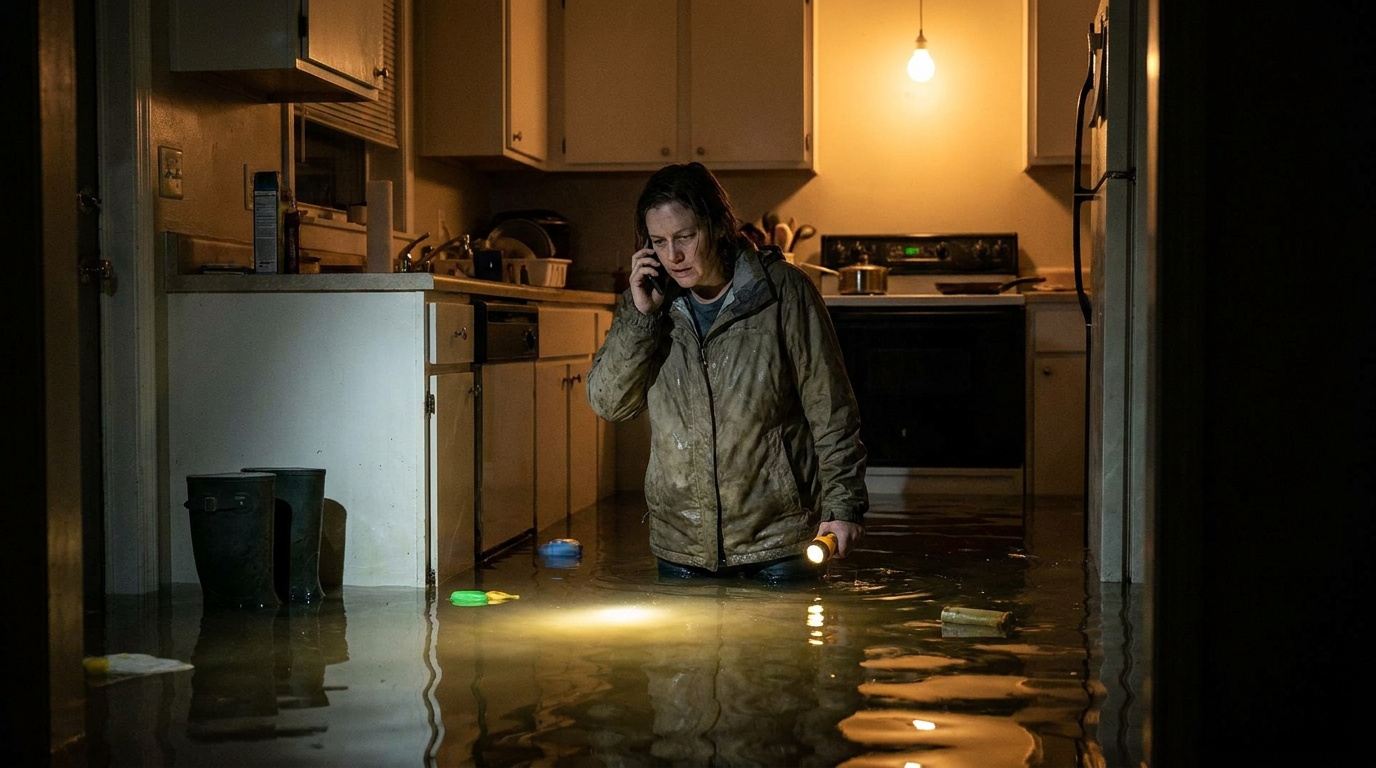 The after-hours caller is not comparison shopping. They hire the first voice that answers.
How much does an after-hours answering service cost?
Live after-hours coverage usually costs more per call than daytime service, because after-hours rates add 10 to 25% and some providers charge 1.5 to 2x for overnight and weekend calls. Traditional services bill by the minute, typically $1 to $3 per operator minute, so a busy month with long emergency intakes adds up fast, plus setup fees and holiday surcharges.
AI changes the cost structure completely. Because there is no operator on the clock, AI services include 24/7 coverage at no extra charge and often run a flat monthly rate instead of per-minute billing. At volume, AI answering comes in 60 to 80% cheaper than a traditional service. When a single booked water job runs into the thousands, the service pays for itself on the first call you would have otherwise slept through.
Is an AI after-hours answering service better than a live one?
For emergency trades, yes, in almost every case that matters. By 2026, the best AI answering services produce conversations callers often cannot distinguish from a human operator. AI wins on the three things that decide after-hours jobs: it answers on the first ring with no hold queue, it handles unlimited calls at once during a storm surge, and it costs a fraction of live staffing.
A human service still has an edge on rare, emotionally complex calls, and the best setups route those few to a person. But for the 2 AM burst pipe, the machine that answers instantly and dispatches beats the operator who takes a message every single time. We go deeper on this tradeoff in our guide on how AI answering services help restoration companies never miss a lead.
When I was on crews, we tracked it without realizing it: the jobs we won after dark were the ones where a person picked up in the first few rings. The ones that went to a recording, we never heard about again. AI just makes that first ring automatic, every time.
What should an after-hours answering service do with an emergency call?
It should triage and dispatch, not transcribe. A message that says “water damage, call back” is useless at 2 AM. A good after-hours service runs a real intake: it confirms the address, identifies the type of loss, gauges severity, asks whether a claim has been filed, and then calls and texts your on-call tech with the details. The dispatch should also be relentless. The way our system handles it, the AI calls the first on-call technician up to three times, and if they do not pick up, it escalates to the next tech in line until someone verbally confirms they are rolling. An emergency should never die in a single unanswered ring. For water losses specifically, speed is not optional, because mold growth can begin within 24 to 48 hours of water intrusion, and the first three days of a loss are worth far more than the days that follow.
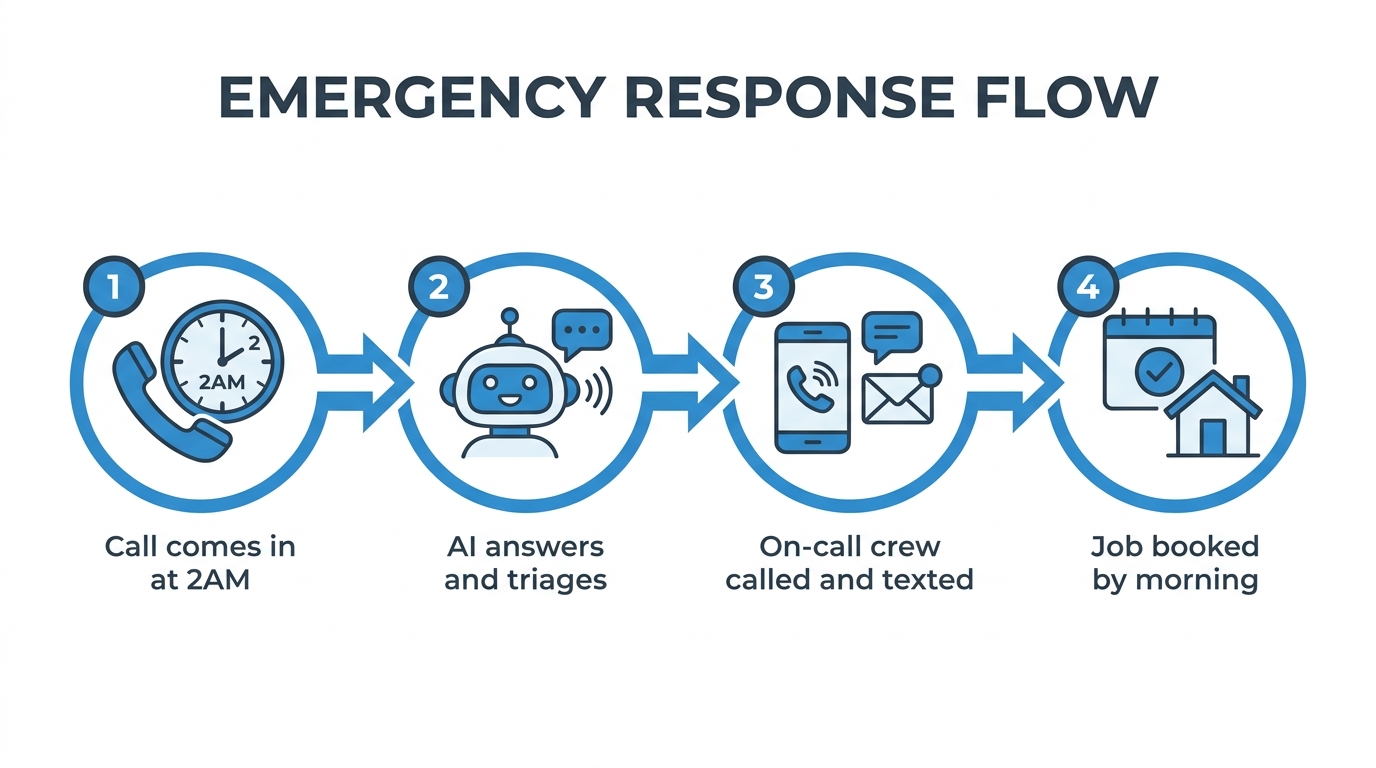 A proper after-hours intake turns a midnight call into a dispatched crew before sunrise.
Here is the standard your service should meet on every after-hours emergency:
- Answer on the first ring, every time, with no hold queue
- Capture the property address and the type and severity of the loss
- Confirm whether the caller is the owner, tenant, or property manager
- Call and text the on-call crew, escalating to the next tech until one verbally confirms
- Text the caller a confirmation and an arrival window so they stop calling competitors
How do you set up an after-hours answering service for your business?
Faster than you would expect. With a modern AI service, you forward your line after hours, give the system your service area and intake questions, connect your on-call schedule, and you are live the same day. There is no operator training, no per-minute meter running, and no message queue to clear at 7 AM.
The practical move is to start with after-hours and weekends, since that is where the most calls leak, then expand to 24/7 once you see how many jobs you were missing in your sleep. Most contractors are shocked by the overnight volume the first week, because those calls used to vanish into voicemail where they were never counted.
The bottom line is simple. Emergency work happens on the customer’s schedule, not yours, and the contractor who answers is the one who gets paid. An after-hours answering service that triages and dispatches, instead of taking a message, turns the 2 AM call from a missed opportunity into a booked job.
If you want to see exactly how the triage and dispatch logic works on a live emergency call, book a strategy call and we will walk through your after-hours coverage gap and show you what answering every call would do for your bookings.