June 21, 2026
How AI Answering Services Help Restoration Companies Never Miss a Lead
Restoration contractors miss 60-80% of inbound calls. An AI answering service answers every call 24/7, triages by damage type, and dispatches your crew, so you stop losing jobs to whoever answered first.
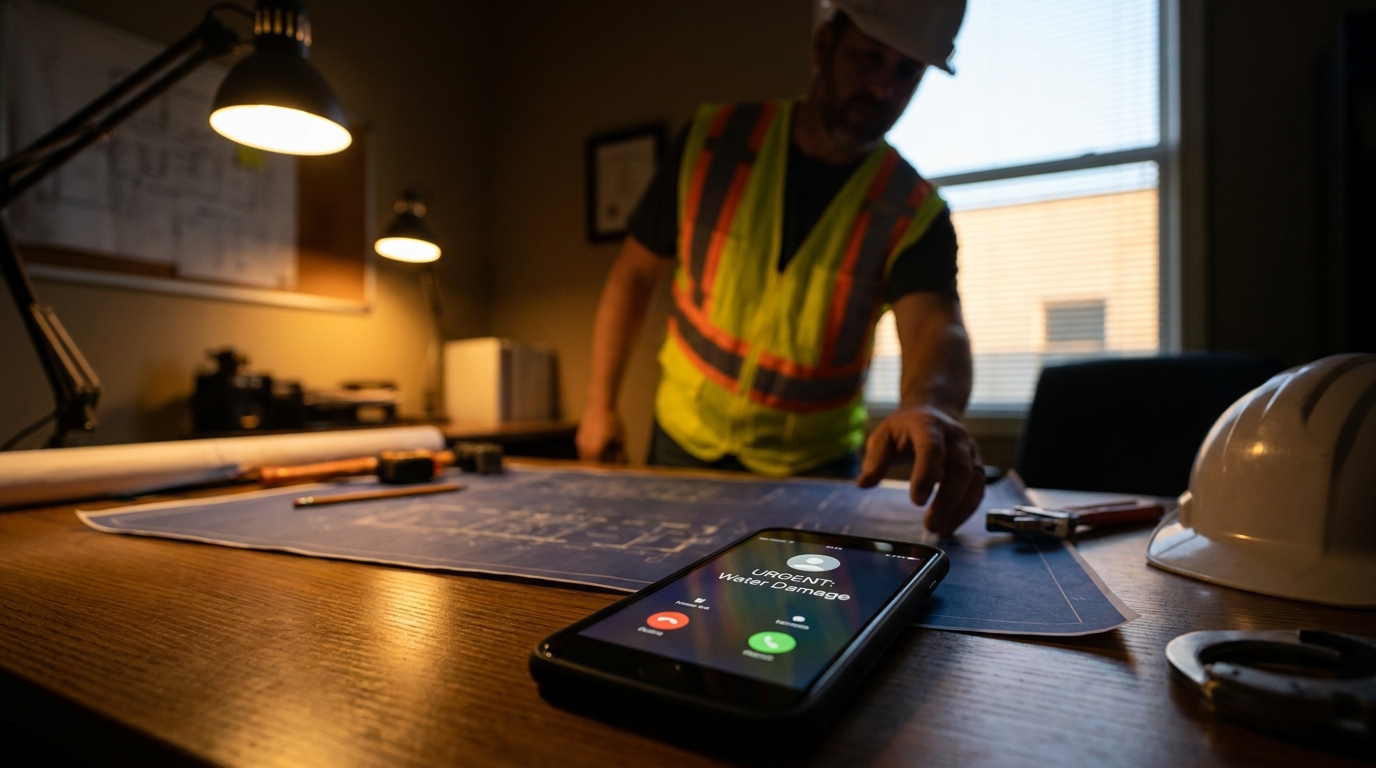
**TL;DR: **General contractors lose $45k to $120k a year to missed calls. For restoration companies, the number is much higher. A single missed commercial loss can run $25,000 to $100,000. Miss two or three of those during storm season and you’re looking at half a million dollars that went to whoever answered first. An AI answering service gives your business a 24/7 voice that qualifies leads, captures job details, and dispatches your crew without you touching your phone.
The Call My Uncle Never Answered
My uncle was a good restorer. IICRC certified, great crew, solid reputation in his market.
He lost an $80,000 condominium job because he missed one phone call.
Not because his price was too high. Not because he did bad work. He just didn’t answer. The homeowner called the next company on the list. That company answered. That company got the job.
Eighty thousand dollars. Gone. Because of one missed call.
That story is why I built RestorationAI.io. And after spending time in this industry, I can tell you: that story isn’t rare. It happens to restoration contractors every single day.
Here’s the scale of the problem. Approximately 14,000 people face a water damage emergency every day in the United States. Those people are scared. Their floors are ruined. They want help right now. They pick up the phone and start calling.
And according to industry data, contractors miss between 60% and 80% of their inbound calls.
That’s not a small leak. That’s a flood.
There’s a fix. It doesn’t require hiring a receptionist. It doesn’t require you to be available 24 hours a day. This post will walk you through exactly what it is and how it works.
Why Do Restoration Companies Miss So Many Calls?
You’re on a job site, in a crawl space, or asleep when the phone rings. There’s no one sitting at a desk waiting. Less than 3% of callers leave a voicemail when sent to one, and 85% of callers who don’t reach a live answer won’t call back. The missed call isn’t just an inconvenience. It’s a closed door.
Restoration is a field business. Your best people are never behind a desk. They’re pulling water out of basements, documenting fire damage, or driving between job sites. When a new lead calls, nobody’s there to pick up.
The problem gets worse after hours. 52% of all service leads come in outside standard business hours. That means the majority of your potential jobs are calling when you’re eating dinner, putting your kids to bed, or sleeping.
And when emergencies hit, timing is everything. Mold can begin growing within 24 to 48 hours of a water event. Homeowners know this. They’re not patient. They call, they get voicemail, and they call the next company.
The contractor who answers is the one who gets paid.
What Exactly Is an AI Answering Service for Restoration?
An AI answering service is a 24/7 virtual receptionist trained on your business. It answers every call, qualifies the lead, captures key job details, address, damage type, insurance status, severity, and can alert your on-call crew instantly. It sounds human, never sleeps, and never puts a caller on hold.
Think about what a homeowner experiences at 2 AM when a pipe bursts in their kitchen.
They find you on Google. They call. Right now, they probably get your voicemail. They hang up. They call the next contractor.
With an AI answering service, they call and a calm, professional voice picks up immediately. It asks what happened. It gets their address. It asks if a claim has been filed. It tells them help is on the way and sends your on-call tech a dispatch alert.
That homeowner feels taken care of. You get the job.
The technology connects directly to your existing tools. AI productivity gains in restoration scheduling and dispatching are running 15 to 40%, according to R&R Magazine’s 2025 Year in Review. This isn’t experimental. It’s working right now for restoration companies across the country.
The Restoration Revenue Window: Why the First Company to Answer Wins
This is the thing nobody in this industry talks about directly. So let me say it plainly.
In restoration, answering the phone IS the close.
Most industries have a sales process. You answer, you quote, you follow up, you close. In restoration, that process collapses into a single moment. A homeowner with standing water in their basement is not comparison shopping. They are not waiting to see three bids. They are calling down a Google list and hiring the first voice they hear.
That’s the Restoration Revenue Window. It’s the 60 seconds between when a lead calls and when they give the job to whoever answered.
My uncle didn’t lose that $80,000 condo job because he priced too high. He lost it because he never got inside the window. The job was gone before he knew it existed.
The research backs this up hard. 78% of customers buy from the company that responds first. And the odds of qualifying a lead drop by 10x after just the first hour, according to research from MIT Sloan Management Review.
In most industries, that stat means you should call back faster. In restoration, it means you need to answer the first time. Every time. Because there is no callback opportunity. 85% of callers who don’t reach someone won’t try again.
That’s not a sales problem. That’s a coverage problem. And AI fixes it.
What Happens to Your Calls During a Storm Surge?
When a storm hits your market, call volume can spike 10x overnight. If you run a small crew, you cannot physically answer every call. An AI answering service handles unlimited simultaneous calls. No lead gets a busy signal during the highest-revenue window of your entire year.
Picture this. A hail storm rolls through your market on a Thursday night. By Friday morning, every roofer and restoration contractor in a 50-mile radius is getting hammered with calls.
This is when the biggest jobs get handed out.
A $40,000 commercial roof job. A $25,000 storm mitigation contract. A string of residential claims that each run $8,000 to $12,000. These jobs go to whoever answered the phone Thursday night and Friday morning at 6 AM.
If your phone goes to voicemail during that window, those jobs don’t go on hold. They go to your competitor. Permanently.
After-hours leads that receive a same-night response have an 85% contact rate. Leads that wait until the next morning drop to a 35% contact rate. That gap is where five and six-figure jobs disappear.
In my six years working as a restoration tech, the pattern during storm surges was always the same: the companies answering calls at 11 PM were booking the biggest jobs by 8 AM. The ones who weren’t lost those jobs permanently. The homeowner never called back.
A human answering service runs out of capacity. Your crew runs out of energy. AI doesn’t. It handles call number one and call number one hundred with the same speed and professionalism.
Companies with 24/7 response capability convert at 2.5 times the rate of 9-to-5 operations. In a storm market, that multiplier is the difference between a record quarter and watching someone else have one.
How Does an AI Answering Service Actually Qualify a Restoration Lead?
A well-trained AI doesn’t just take a name and number. It asks the right questions: What type of damage? Residential or commercial property? Has an insurance claim been filed? Is there standing water right now? This triage separates a $2,000 job from a $50,000 one before you even call back.
Here’s what a real call flow looks like.
A homeowner calls at 11:30 PM. Your AI answers on the first ring. It greets them by your company name. It asks what happened. The caller says there’s water coming through the ceiling from a burst pipe upstairs.
The AI collects the address. It asks if they’ve already filed a claim with their insurance company. It asks whether there’s standing water and how many rooms are affected. It tells the caller that a technician will be in touch within the hour. It sends you, or your on-call tech, a full dispatch alert with every detail captured.
You wake up at 7 AM to a summary of every call that came in overnight. Job type, severity level, contact info, insurance status, and the caller’s urgency. You know exactly which jobs to prioritize before you’ve had your first cup of coffee.
A single residential water mitigation job averages $3,000 to $7,000. A large commercial loss can run past $100,000. Knowing the difference before dispatch means your best crew goes to the highest-value job first.
Is an AI Answering Service Worth It for a Small Restoration Company?
If your average job is worth $3,000 to $7,000 and you miss even two calls a week, you are likely leaving $300,000 or more on the table each year. An AI answering service costs a fraction of that. For most restoration companies, capturing a single job pays for an entire year of the service.
Let’s run the actual math.
General contractors lose $45,000 to $120,000 per year to missed calls, based on data from 1,200+ contractors across HVAC, plumbing, and electrical. But those numbers dramatically understate the problem for restoration.
Here’s why. A single residential water mitigation job averages $3,000 to $7,000. A commercial loss runs $25,000 to $100,000 or more. Miss two commercial jobs a month during storm season and you’re looking at $500,000 or more in revenue that went to whoever answered first.
And the math only works against you. Less than 3% of callers leave a voicemail when they reach one. The other 97% call your competitor. Those jobs don’t come back.
An AI answering service from RestorationAI.io costs less per month than a single missed job.
One answered call. One booked job. The service pays for itself.
Now add up what happens when you capture calls you’re currently sleeping through. Two extra jobs a month. Four. Ten during storm season. At $5,000 average job value, that’s $10,000 to $50,000 in revenue you weren’t getting before.
The most common objection I hear is: “Will it sound robotic? Will it scare off my customers?”
Fair question. The answer is no. Today’s AI voice technology is built on natural language processing that handles real conversation. It pauses, listens, responds to what the caller actually says. The AI customer service market has grown to $12 billion and is projected to hit $47 billion by 2030, because it works at a level customers actually accept.
Your callers are in a crisis. They want someone to answer and help. The AI does exactly that.
The Bottom Line
Restoration is a 24/7 emergency business running on 9-to-5 coverage. That gap is where your revenue disappears.
Every missed call is a job your competitor answered. Every night your phone goes to voicemail is a window where five and six-figure jobs get handed out without you.
AI answering doesn’t replace your crew. It makes sure your crew has work. It puts you inside the Restoration Revenue Window on every single call, at 2 AM on a Sunday just as reliably as 10 AM on a Monday.
Want to go deeper on the after-hours problem specifically? Read our guide on why the after-hours answering service call is the job you can’t afford to miss, where we break down what a good after-hours service should actually do on a 2 AM emergency call.