August 3, 2026
The Best Answering Service for Plumbers: Dispatch Beats Message-Taking
Compare live vs AI answering services for plumbers. Why message-taking services lose burst pipe calls—and what actually works for emergency dispatch.
Part of our guide: AI receptionist for small business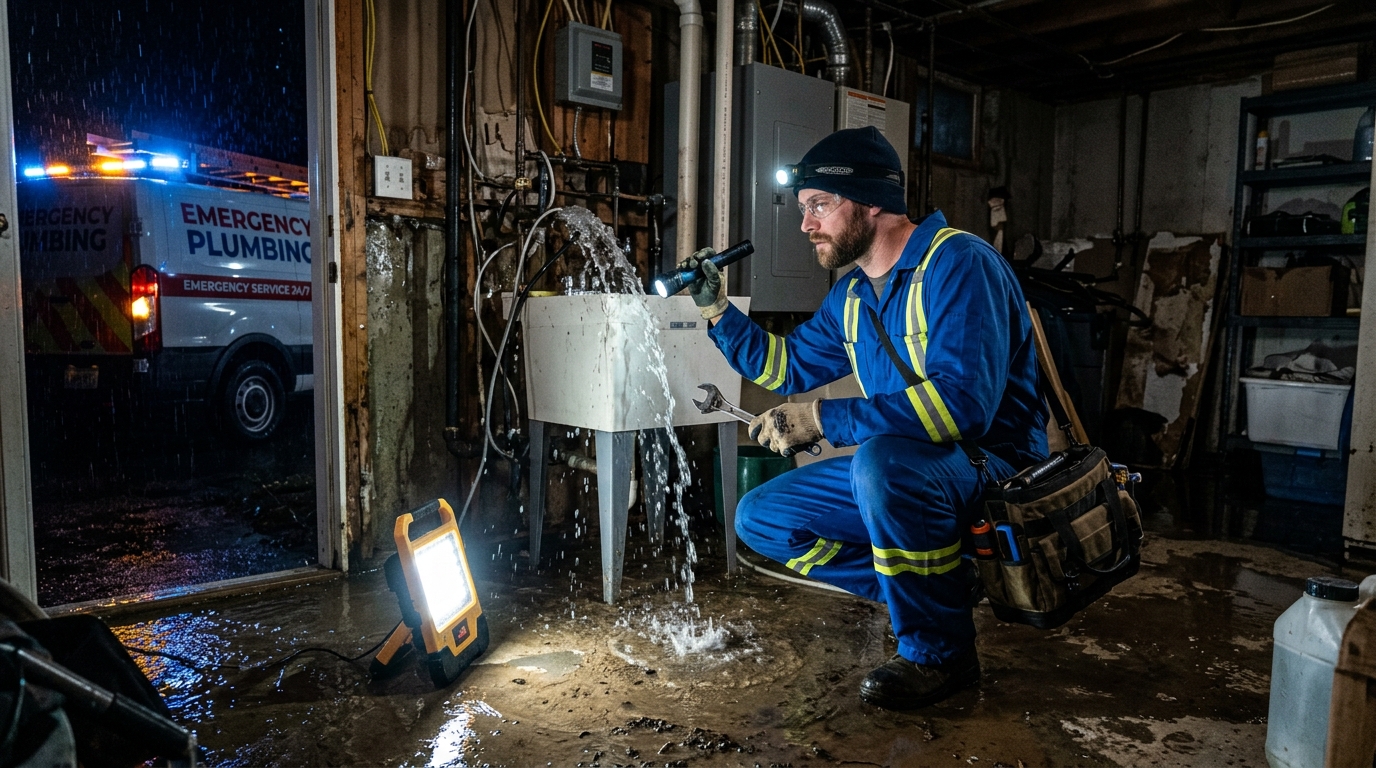
TL;DR
A burst pipe at 2 AM doesn’t need a message. It needs a plumber. Traditional answering services that only take voicemail lose exactly the jobs with the highest tickets—emergency calls worth $2,000–$50,000. The best answering service for plumbers answers the call, triages the urgency, dispatches a tech immediately, and confirms arrival time in one conversation. That’s what separates a captured job from a missed one.
Why Plumbing Emergency Calls Are Different
This is part of our complete guide on AI receptionist for small business.
When a homeowner’s water heater floods a basement at midnight, they don’t call one plumbing company and leave a voicemail. They call one plumber, get a live person or immediate answer, and book it on the spot. If that first number doesn’t answer, 95% of emergency callers will not leave a message—they dial the next plumber. One unanswered call is one lost job worth $1,500–$50,000 depending on damage scope.
In my years running crews, the jobs we lost to voicemail were almost never the small calls—they were always the emergency jobs with the highest revenue. The homeowner was already stressed, water was already spreading, and whoever answered first owned that job.
Plumbing is unique because 70–80% of calls are emergencies or can’t-wait situations. That means your answering service strategy is not about customer service—it is about job capture. The wrong strategy loses your best revenue.
What Is the Best Answering Service for Plumbers?
The best answering service for plumbers does more than take a message and promise a callback tomorrow. It answers every call within seconds, qualifies the emergency on the first ring, and either books the appointment immediately or dispatches a tech from your crew.
Most traditional answering services—live operators on a call center floor—are built for doctors’ offices and law firms. They take a name, number, and brief note. A plumber calls back later. That model loses emergency jobs because the customer has already called three other plumbers by then.
The modern answer is a 24/7 AI answering service that dispatches immediately. It answers in seconds (no queue), gathers all emergency details on the first call (water category, location, damage scope, insurance status), and fires off a dispatch notification to your on-call tech while the customer is still on the line. When the customer asks “how long until someone can get here,” the answer is real: your tech accepts, and you confirm their ETA.
That is job capture. Everything else is just voicemail.
How Much Does a Plumbing Answering Service Cost?
Cost varies dramatically based on the model, and the cheapest option is almost always the worst.
Live Answering Services: Traditional call center answering services cost $200–$800 per month, with most charging $0.95–$1.65 per minute or $4–$9 per qualified call. For a one-truck shop taking 60 inbound calls per month (typical), you’re paying $300–$700 per month for an operator to take messages—many of which will never convert because the customer already called your competitor.
AI Answering Services: Modern AI answering services cost $79–$199 per month flat-rate or $0.30–$0.80 per call, with unlimited call volume. That same one-truck shop pays $199/month and gets unlimited after-hours coverage with instant dispatch—no per-minute overages, no surge pricing during storms.
The ROI Math: One captured emergency water-heater replacement is worth $1,500–$3,500. One captured sewer-line emergency is worth $5,000–$15,000. A single saved emergency job pays for 3–12 months of answering service. A live answering service that loses that job because it only takes a message has already failed, no matter the cost.
What Should a Plumbing Answering Service Do on an Emergency Call?
The right answering service does five things in under five minutes:
-
Answer instantly — no queue, no hold music. A panicked homeowner doesn’t wait. If you don’t pick up in 3 rings, 85% will hang up and call the next plumber.
-
Triage the emergency — ask the right questions to understand urgency. Is it a burst pipe (dispatch immediately) or a slow leak (can it wait 24 hours)? Is there active water damage? What’s the property address?
-
Confirm customer authorization — get permission to send a technician, confirm the address, get a callback number.
-
Route the dispatch — send a push notification to your on-call plumber with all the details. No SMS delays. No manual callback list. Instant.
-
Confirm arrival time — tell the customer the tech’s name and exact arrival window before the call ends. The customer knows help is coming. They stop calling other plumbers.
Traditional answering services skip steps 4 and 5 entirely. They take a message and promise to call you back with a message. The customer is long gone by then.
Can an AI Answering Service Book Plumbing Jobs and Dispatch a Tech?
Yes, completely. That is the core feature, not a limitation.
A properly configured AI answering service connects to your team management system or sends real-time push notifications to your on-call plumber. When an emergency call comes in at 1 AM, the AI gathers all the critical details (address, urgency, customer name, scope of damage) and fires a notification to your tech. Your tech accepts the job with a single tap, and the customer is told “Your plumber will be there in 45 minutes.” The job is captured, the customer is calm, and the tech is already on their way.
Unlike traditional services that hand off to a human operator who then manually finds your contact info and calls you, AI dispatch is instant. Your tech knows about the job seconds after the call ends—sometimes before the customer even hangs up.
Many plumbers worry this takes a “human touch” out of the booking process. It does not. The customer speaks to an AI that sounds professional and competent, answers questions clearly, and confirms everything. Most customers cannot tell the difference between an AI receptionist and a human after the first 10 seconds—what they care about is getting help fast.
Why Do Plumbers Lose After-Hours Calls to Competitors?
Because the wrong answering service is worse than no answering service.
A traditional live answering service that only takes messages creates a false sense of security. You pay $300–$600 per month and assume all your after-hours calls are covered. In reality, 80% of callers hang up before leaving a voicemail, and of those who do leave a message, most have already dialed your competitor by the time they hang up. The message sits in your voicemail for hours. The job is already booked somewhere else.
Storm surge nights are the worst. When a line of thunderstorms hits and you get 40 calls between 11 PM and 3 AM, a live answering service with three operators handling a hundred plumbing companies will queue or miss your calls. The AI service with unlimited concurrent call capacity never queues and never misses.
Plumbing businesses lose approximately $50,000–$125,000 per year to unanswered or missed emergency calls. That is not because plumbers don’t care about answering calls—it is because they are under the sink when the phone rings and can’t pick up. The right answering service bridges that gap. The wrong one just takes messages about the jobs you’ve already lost.
The moment I realized how many burst-pipe calls my uncle’s crew was losing to voicemail—jobs worth $10k, $15k, sometimes $50k—was the moment I knew the industry needed something different from a live operator taking notes on hold. The customer doesn’t need a message callback. They need immediate dispatch. That is why Restoration AI exists for emergency trades.
How to Set Up an Answering Service for Your Plumbing Company
Most modern answering services take 5–15 minutes to activate:
-
Sign up — provide your phone number and service details (emergency plumbing, your service area, pricing for common jobs).
-
Configure dispatch — connect to your team notification system or provide your on-call plumber’s phone number. The service sends push notifications or SMS alerts on every incoming call.
-
Forward your business line — point your main number to the answering service. All after-hours and overflow calls route automatically.
-
Test — make a test call to confirm the AI answers, gathers details, and dispatches correctly.
-
Go live — your after-hours coverage is active 24/7 immediately.
No contracts, no setup fees, no per-minute overages. You pay a flat monthly fee and get unlimited call handling capacity. If you need to adjust coverage or disable the service, it takes 30 seconds.
The Difference Dispatch Makes
A burst pipe at 2 AM is not a message-taking scenario. It is a dispatch scenario. The difference between an answered call and a missed call is often the difference between a $500 service call and a $50,000 water damage remediation job. The right answering service understands that distinction and acts accordingly.
The best answering service for plumbers is one that dispatches on the first call, not days later. It captures the emergency, confirms the appointment, and sends your tech out while the customer is still on the phone. That is how you stop losing jobs to voicemail.
About the Author
Santino Velci is the founder of Restoration AI, a 24/7 AI answering and dispatch platform built for emergency trades. After six years working as a restoration technician in Hawaii, he watched contractors lose five and six-figure jobs to unanswered calls. He built Restoration AI to solve that problem—ensuring every call is answered, every lead is qualified, and every tech is dispatched instantly. Today the platform handles over 1,600 emergency calls daily for restoration contractors, plumbers, HVAC companies, and other service businesses nationwide. Connect on LinkedIn.